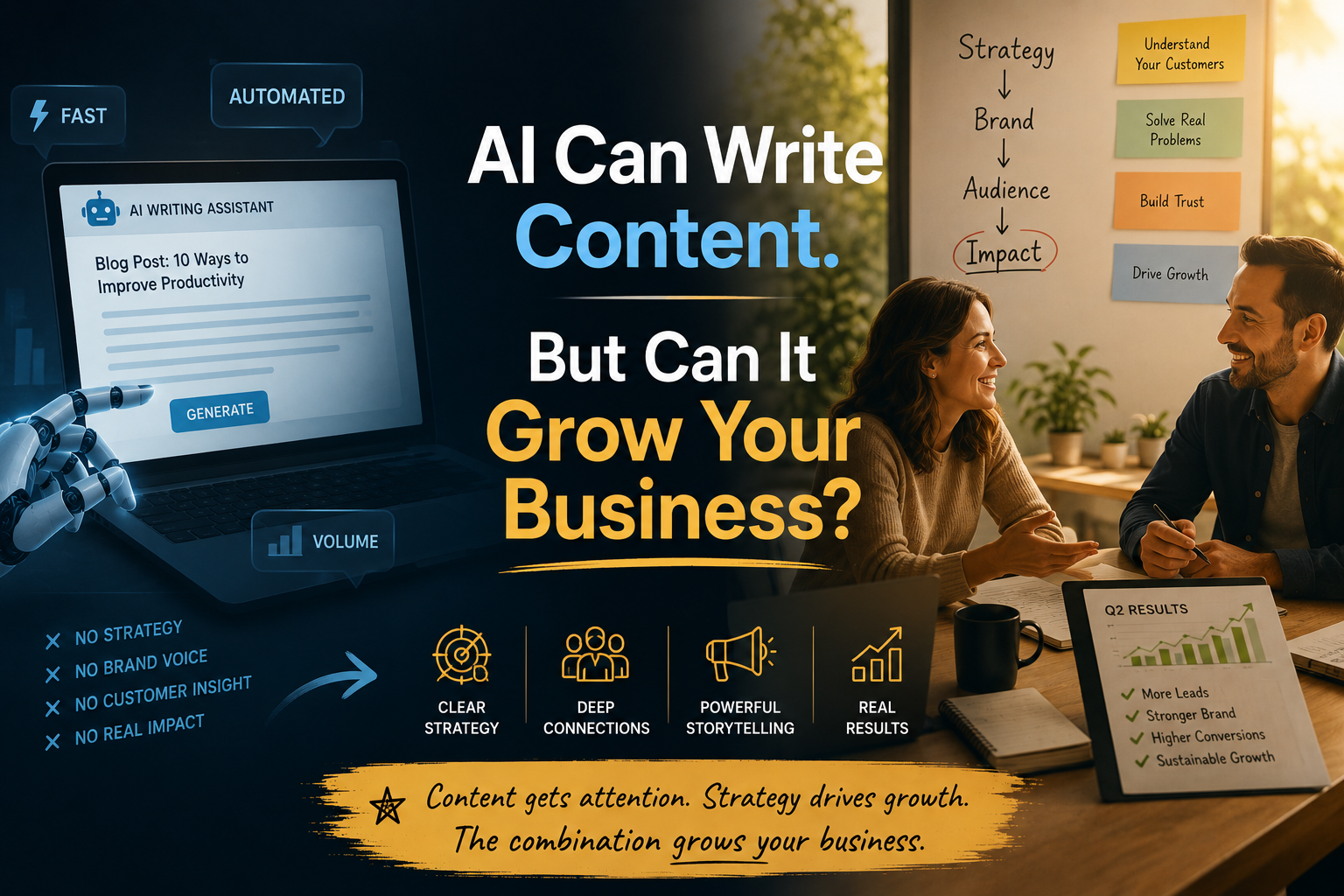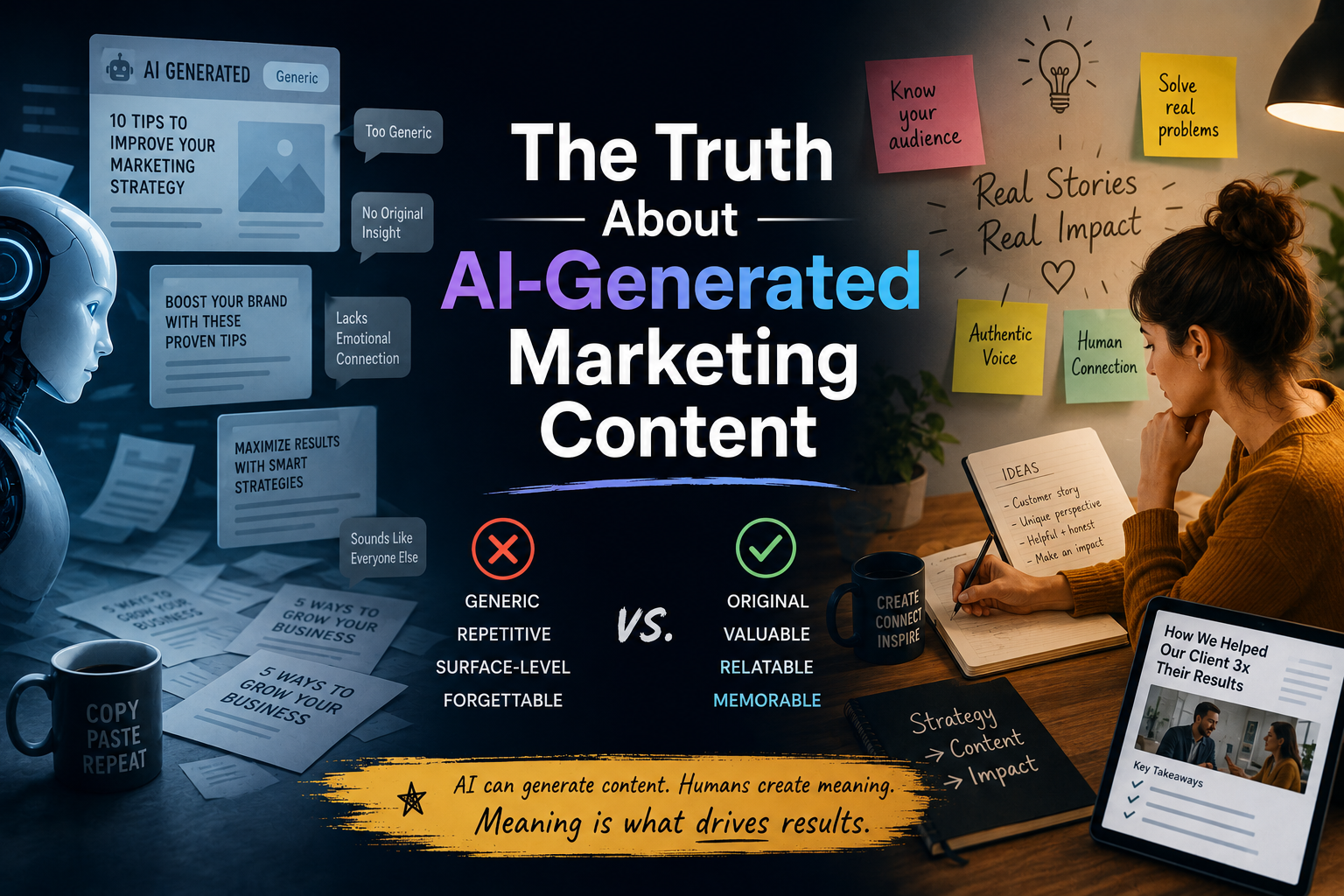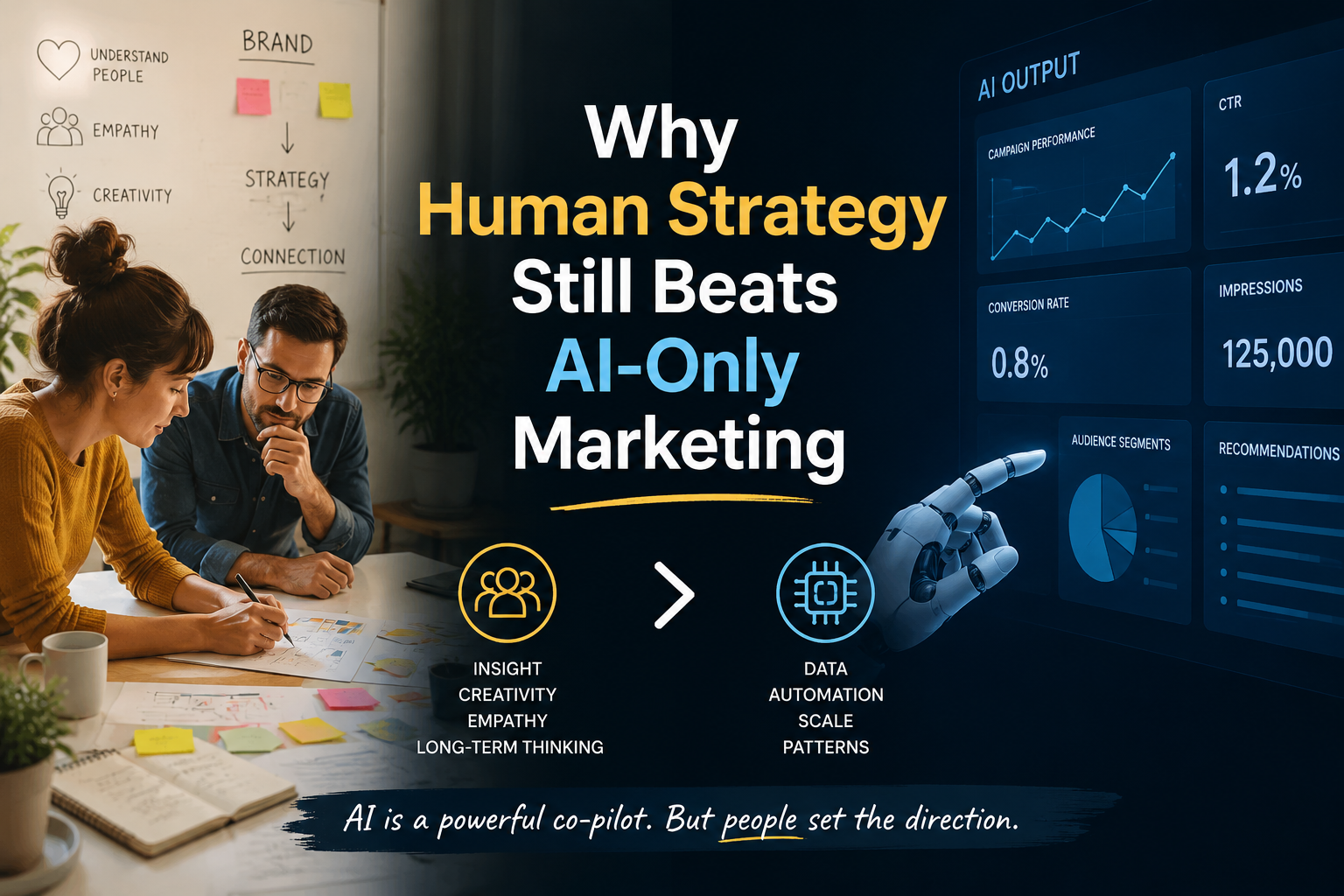
AI can write content. But can it grow your business? This post explores AI's limits and how human strategy is key for real growth. Harness AI correctly....
Why Businesses Still Need Marketing Experts In The Age Of AI
Why Businesses Still Need Marketing Experts in the Age of AI
The rapid evolution of artificial intelligence has introduced a paradigm shift across industries, and marketing is no exception. Consequently, many leaders are asking a critical question about the future of their teams. The answer to why businesses still need marketing experts in the age of AI lies not in resisting technology, but in understanding its limitations and leveraging the uniquely human skills that machines cannot replicate. While AI provides unprecedented tools for automation and data analysis, it lacks the strategic foresight, creative spark, and deep customer empathy that are the hallmarks of a seasoned marketing professional.
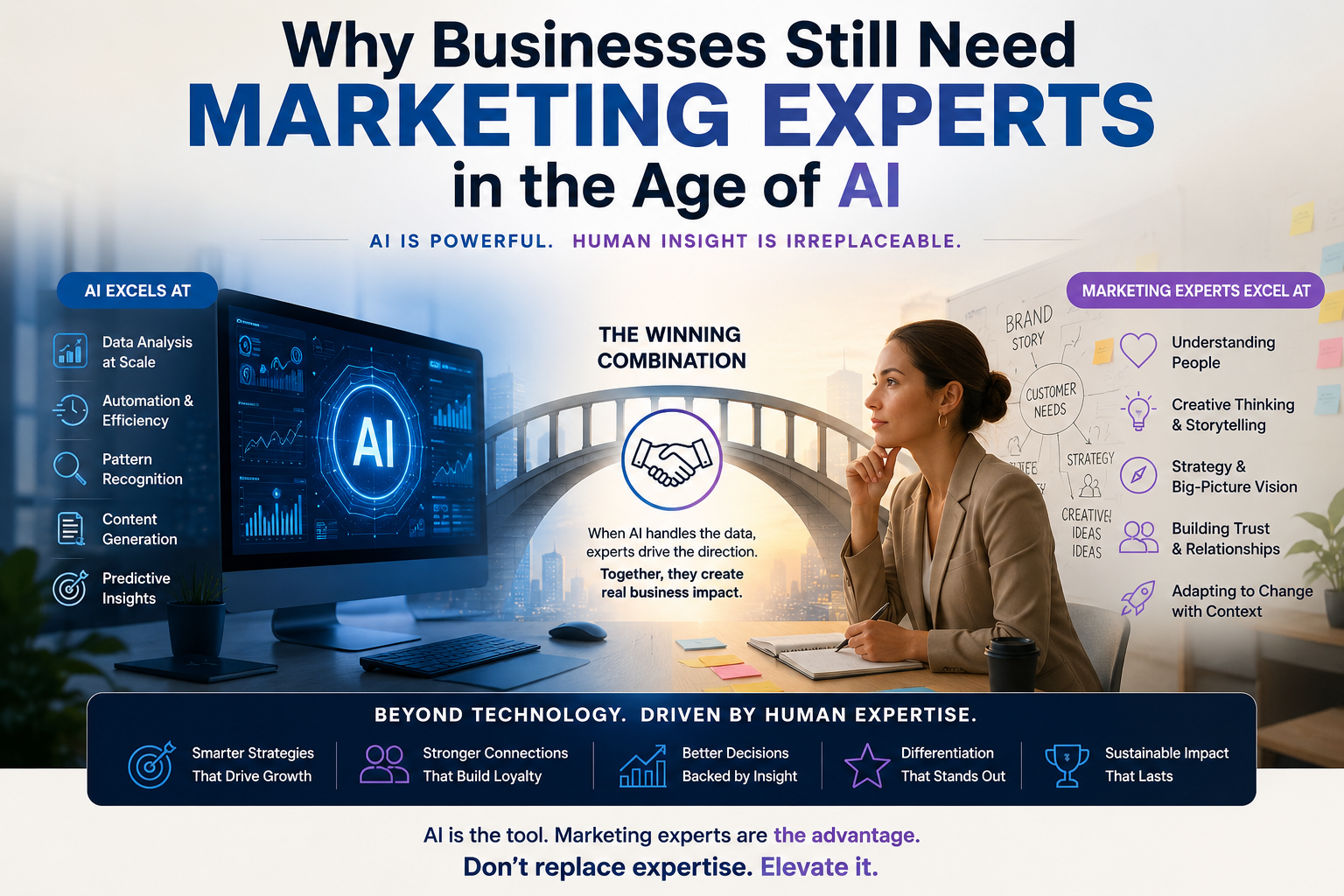
It’s crucial to acknowledge the incredible capabilities AI brings to the table. For example, AI algorithms can analyze vast datasets to identify trends, automate repetitive tasks like email sends, and optimize ad campaigns in real-time. These tools are not just helpful; they are transformative for efficiency and scale. Furthermore, they can offer insights into customer behavior that might take a human analyst weeks to uncover. However, these functions are fundamentally tactical. AI operates on the data it’s given and the parameters it’s assigned.
What are the Irreplaceable Skills of a Human Marketer?
As AI handles more of the ‘what’ and ‘how,’ the value of human marketers shifts to the ‘why.’ Certain skills remain firmly in the human domain, and they are more critical than ever in a crowded, AI-influenced marketplace.
Strategic Oversight and Goal Alignment
An AI tool can optimize a campaign for clicks, but it can’t tell you if that campaign aligns with your quarterly business objectives or your five-year brand vision. Specifically, human experts are required to build the overarching strategy. They connect marketing activities to revenue goals, ensure brand consistency across all channels, and pivot strategy in response to complex market shifts that data alone cannot explain. This requires a level of contextual understanding and business acumen that is currently beyond AI’s reach.
Deep Customer Empathy and Nuanced Communication
Marketing, at its core, is about human connection. True empathy—the ability to understand an audience’s fears, desires, and motivations—is essential for creating resonant messaging. A human marketer can navigate cultural nuances, craft a brand voice that builds trust, and tell a story that evokes emotion. In contrast, AI-generated communication can often feel generic or miss the subtle cues that define authentic interaction. It can replicate tone, but it cannot feel the emotion behind it.
Creativity and “Out-of-the-Box” Thinking
Genuine creativity is the engine of memorable marketing. It’s the ‘big idea’ for a campaign that captures the public’s imagination or the innovative approach that disrupts a stale market. As a result of being trained on past data, AI is inherently derivative. It can combine existing ideas in new ways, but it cannot create a truly novel concept born from a flash of human insight. As an authoritative source like the Harvard Business Review notes, AI is changing creative work, not eliminating the need for human creatives.
The Core Reasons Why Businesses Still Need Marketing Experts in the Age of AI
Beyond strategy and creativity, several practical realities underscore the continued need for human oversight. The synergy between human and machine is where modern marketing finds its greatest potential, but the human element remains the critical guiding force.
- Ethical and Brand Safety Navigation: AI can inadvertently generate biased, inappropriate, or off-brand content. Consequently, human oversight is essential to act as an ethical filter, protecting the brand’s reputation and ensuring responsible communication.
- Complex Problem-Solving: When a PR crisis hits or a competitor makes an unexpected move, you need an experienced team to manage the situation. These scenarios require critical thinking, adaptability, and decision-making under pressure—skills that cannot be programmed.
- Building Authentic Relationships: Important marketing functions like high-level partnerships, community management, and sales enablement are built on genuine human relationships. Trust is built between people, not between a person and an algorithm.
- Interpreting ‘Why’ Beyond the ‘What’: An analytics dashboard can tell you that your website’s bounce rate is high. However, a human expert investigates why—is the page loading slowly? Is the messaging confusing? Is the design poor? This interpretive, diagnostic skill is vital for continuous improvement.
Integrating AI and Human Expertise for Maximum Impact
The most forward-thinking companies are not debating man versus machine. Instead, they are building a ‘cyborg’ model where human marketers are augmented by AI tools. For example, a marketer can use an AI platform to analyze customer data and identify a key pain point. Then, the marketer applies their creativity and strategic thinking to develop a campaign that addresses that pain point in a compelling, empathetic way. This approach combines the best of both worlds: the scale and speed of AI with the insight and ingenuity of human talent.
Moreover, this integration requires a solid digital presence to be effective. A successful strategy depends on foundational search engine optimization (SEO) to ensure visibility and holistic marketing strategies that unify all efforts. Ultimately, this synergy is the real answer to why businesses still need marketing experts in the age of AI; it’s not about choosing one over the other, but about creating a collaborative force that drives unprecedented results.
Final Thoughts: The Future is Collaborative
In conclusion, the rise of AI does not signal the end of the marketing expert. On the contrary, it elevates the role. By automating the mundane, AI frees up human marketers to focus on what they do best: strategizing, creating, connecting, and leading. The future of marketing belongs to those who can master this powerful collaboration, using technology not as a replacement, but as a tool to amplify human intelligence and creativity. The need for true expertise has never been greater.
Related Posts