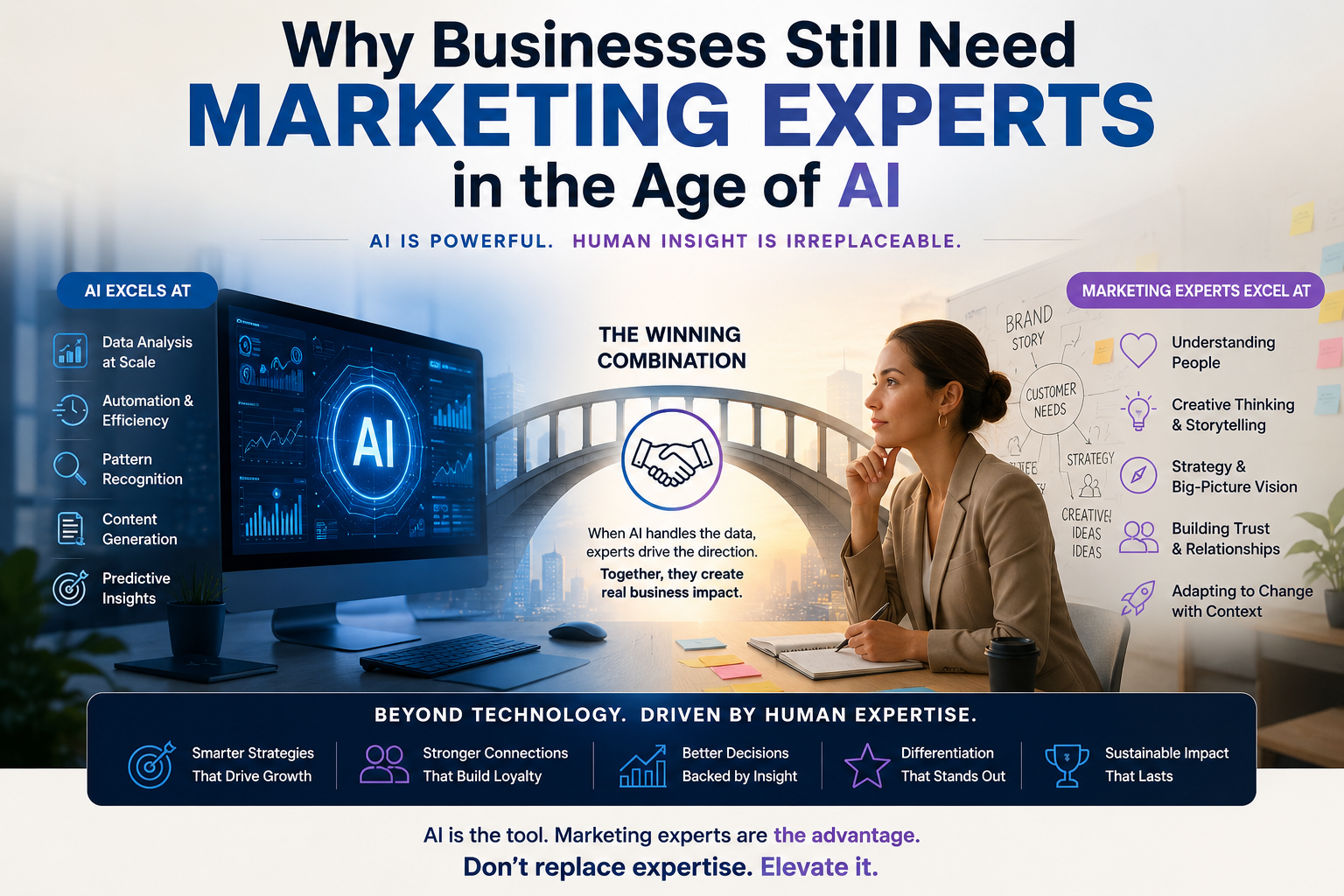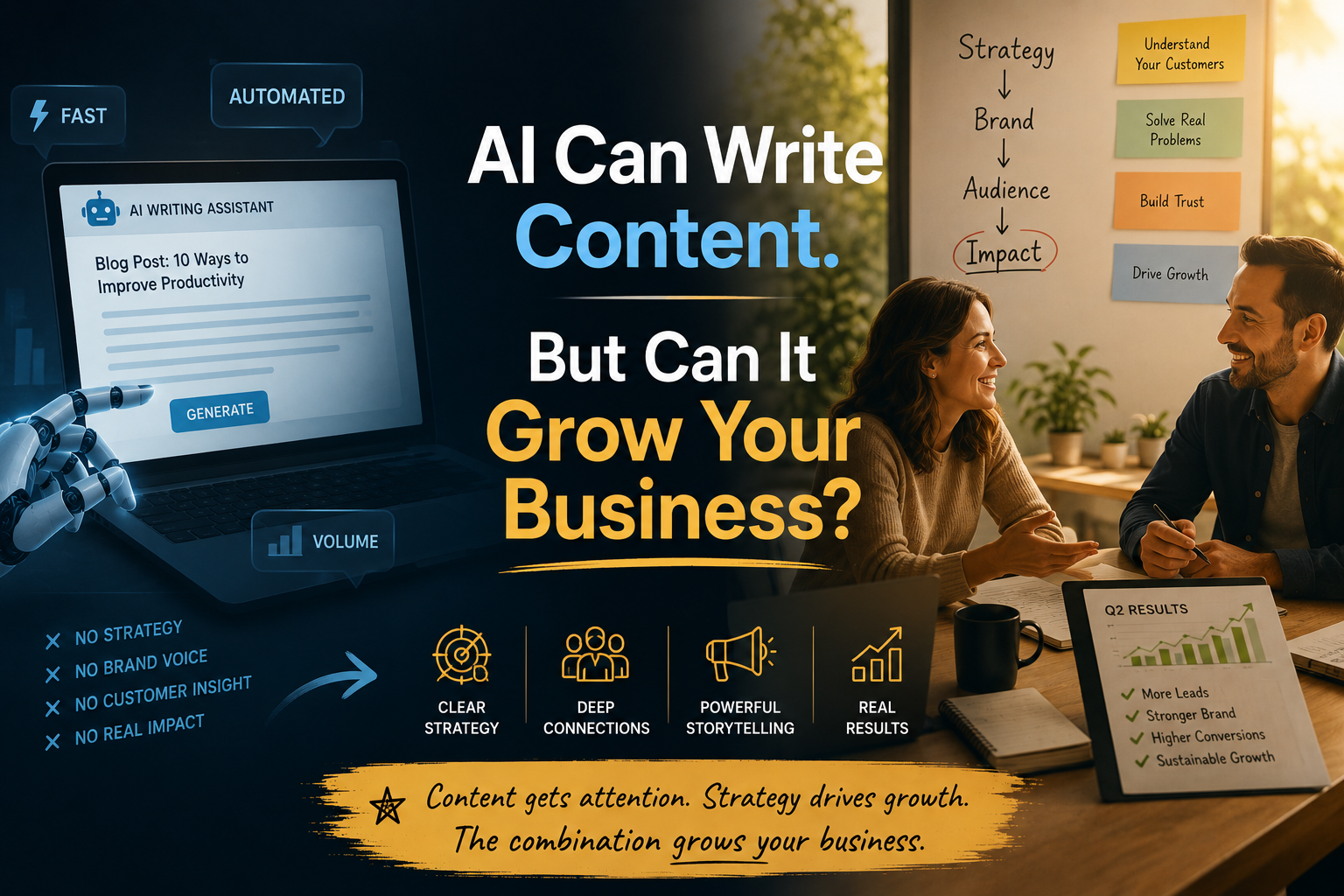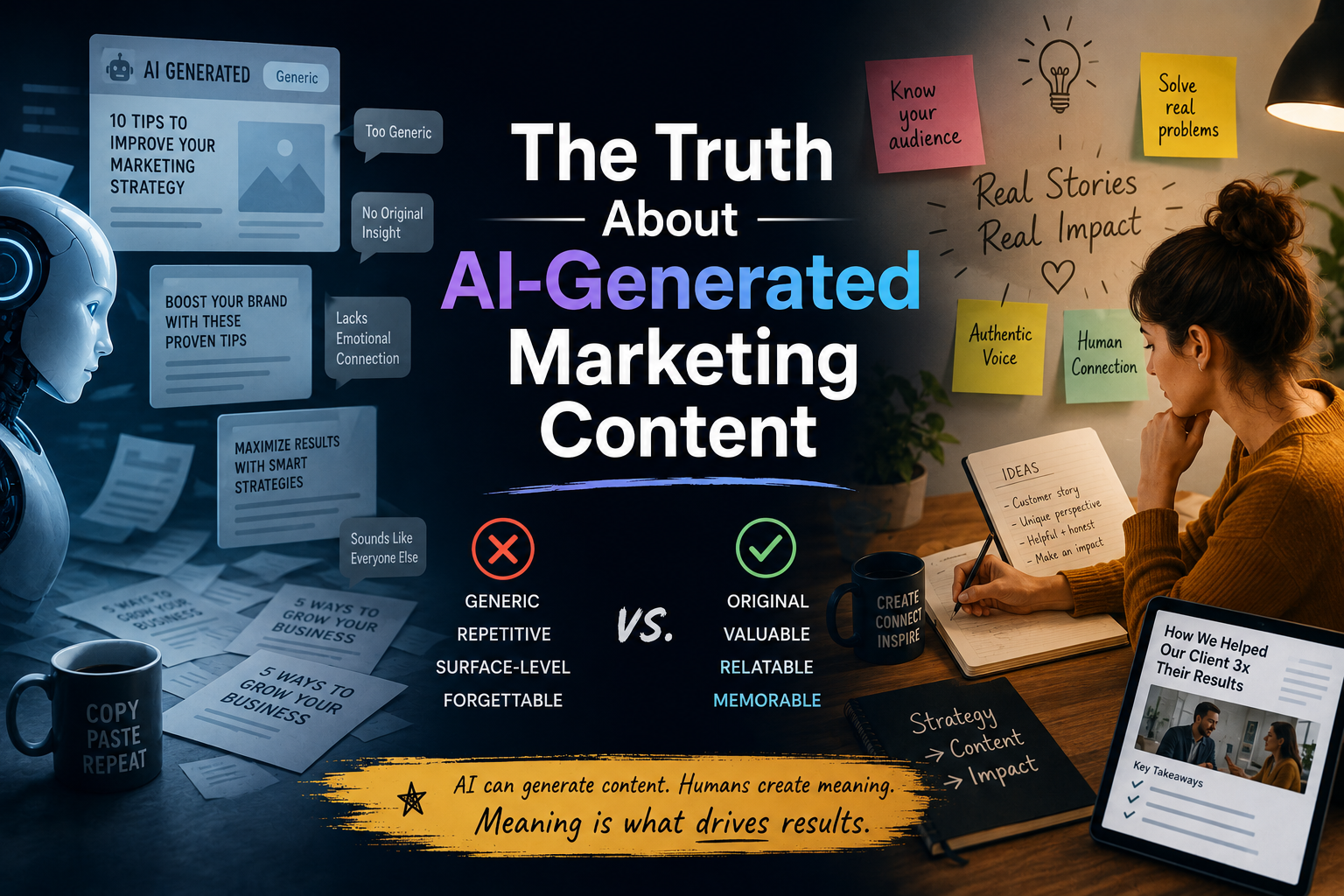
AI is a powerful tool, but not a replacement. Why businesses still need marketing experts in the age of AI is clear: for strategy, creativity, and empath...
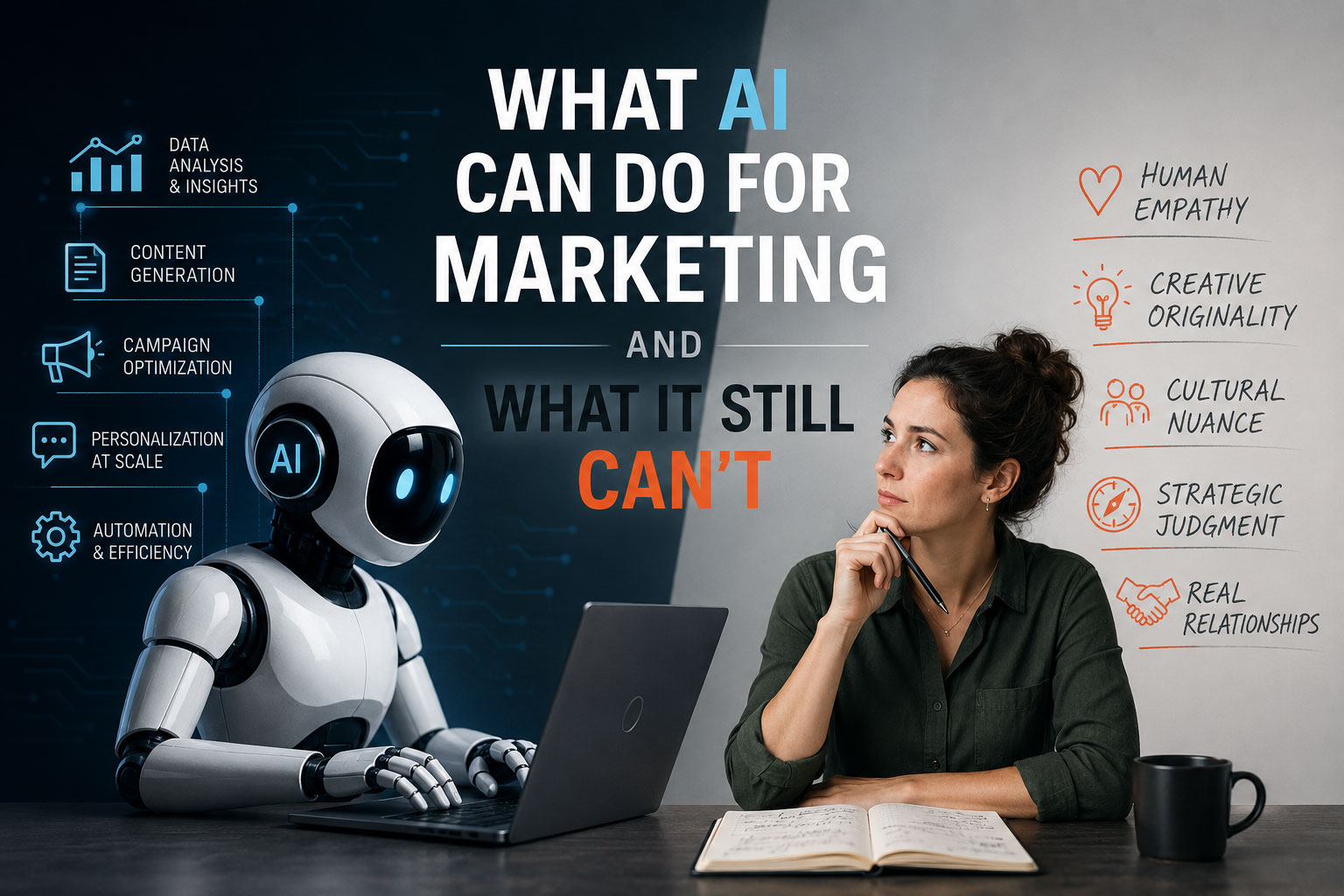
What AI Can Do For Marketing – And What It Still Can’t
Artificial Intelligence is rapidly transforming the business landscape, and marketing is at the epicenter of this revolution. For marketers, understanding what AI can do for marketing – and what it still can’t is crucial for building effective, future-proof strategies. Consequently, leveraging AI is no longer a futuristic concept but a present-day necessity for gaining a competitive edge. This guide explores the powerful capabilities AI brings to the table, while also acknowledging its current limitations to help you strike the perfect balance.
The Powerhouse: What AI *Can* Do for Marketing Today
AI’s primary strength lies in its ability to process and analyze vast amounts of data at a speed and scale impossible for humans. This capability unlocks several powerful applications that can dramatically enhance your digital marketing strategies. Furthermore, these tools can free up your team to focus on more strategic initiatives.
Hyper-Personalization at Scale
AI algorithms can analyze user behavior, purchase history, and demographic data to deliver highly personalized content, product recommendations, and offers. For example, Netflix’s recommendation engine and Amazon’s product suggestions are classic instances of AI-driven personalization. This level of customization significantly improves customer experience and boosts conversion rates. Therefore, businesses can create unique journeys for thousands or even millions of customers simultaneously.
Predictive Analytics and Customer Insights
Predictive analytics models use historical data to forecast future trends, customer churn, and lifetime value. Importantly, this allows marketers to be proactive rather than reactive. By identifying at-risk customers, you can launch targeted retention campaigns. Similarly, by understanding which leads are most likely to convert, your sales team can prioritize its efforts more effectively. This data-driven foresight is invaluable for optimizing budgets and maximizing ROI in areas like paid advertising campaigns.
Automating and Optimizing Repetitive Tasks
Many marketing functions involve repetitive, time-consuming tasks that are perfect for automation. AI can handle these with efficiency and precision. Some key areas include:
- Email Marketing: AI can optimize send times, personalize subject lines, and segment audiences for maximum engagement.
- Social Media Management: Tools can schedule posts for optimal reach, analyze audience sentiment, and even generate draft content.
- Ad Bidding: AI-powered platforms automatically adjust bids in real-time for PPC campaigns to achieve the best possible cost-per-acquisition.
- Content Curation: AI can scan the web for relevant articles and content to share with your audience, keeping your channels active and informative.
What are the Current Limitations of AI in Marketing?
Despite its impressive capabilities, AI is not a silver bullet. Recognizing its limitations is just as important as harnessing its strengths. However, these limitations also highlight the enduring value of human marketers.
The Lack of Genuine Creativity and Empathy
While generative AI can produce text, images, and even video, it lacks genuine creativity and emotional intelligence. AI models learn from existing data, which means their output is often derivative. As a result, they cannot create a truly groundbreaking campaign concept or write copy that resonates with deep human emotion and empathy. The nuance of brand storytelling and connecting with an audience on a personal level remains a fundamentally human skill.
Strategic Nuance and Brand Voice
Developing a long-term marketing strategy requires understanding market context, competitive landscapes, and the subtle intricacies of a brand’s voice and values. AI can provide the data to inform this strategy, but it cannot build the strategy itself. For instance, a human strategist must decide how to position a brand, navigate a PR crisis, or build a community. These decisions require a level of abstract thinking and contextual awareness that AI currently lacks.
A Balanced View: What AI Can Do for Marketing – And What It Still Can’t
The most effective approach is a symbiotic one, where human intelligence guides artificial intelligence. Think of AI as the world’s most powerful co-pilot. It can analyze the terrain, manage the complex systems, and suggest routes, but the human pilot is still the one who sets the destination and makes the critical judgment calls. A deep understanding of what AI can do for marketing – and what it still can’t allows for this powerful collaboration. For example, a marketer can use AI to identify a segment of customers with declining engagement. The AI provides the ‘what’, but the marketer must then use their creativity and strategic thinking to devise the ‘why’ and create a compelling campaign to win them back. This synergy is essential for modern search engine optimization and content strategies, as highlighted by industry leaders like the Marketing AI Institute.
Moreover, the ethical implications of AI, such as data privacy and algorithmic bias, require human oversight. Marketers are the custodians of the customer relationship, and they must ensure that AI tools are used responsibly and ethically. According to research from authorities like Gartner, integrating AI without a strong ethical framework can lead to significant brand damage. Therefore, human governance is not just beneficial; it’s essential.
Final Thoughts: The Future is Collaborative
Ultimately, the conversation isn’t about AI replacing marketers but about augmenting them. The marketers who thrive will be those who learn to work alongside AI, using it to automate the mundane, generate deep insights, and operate at a scale previously unimaginable. They will then layer their uniquely human skills—creativity, strategy, and empathy—on top to build brands and campaigns that truly connect. By clearly understanding what AI can do for marketing – and what it still can’t, you can build a team that is not just efficient, but also innovative and resilient. The future of marketing is not artificial; it’s intelligently human.
Related Posts