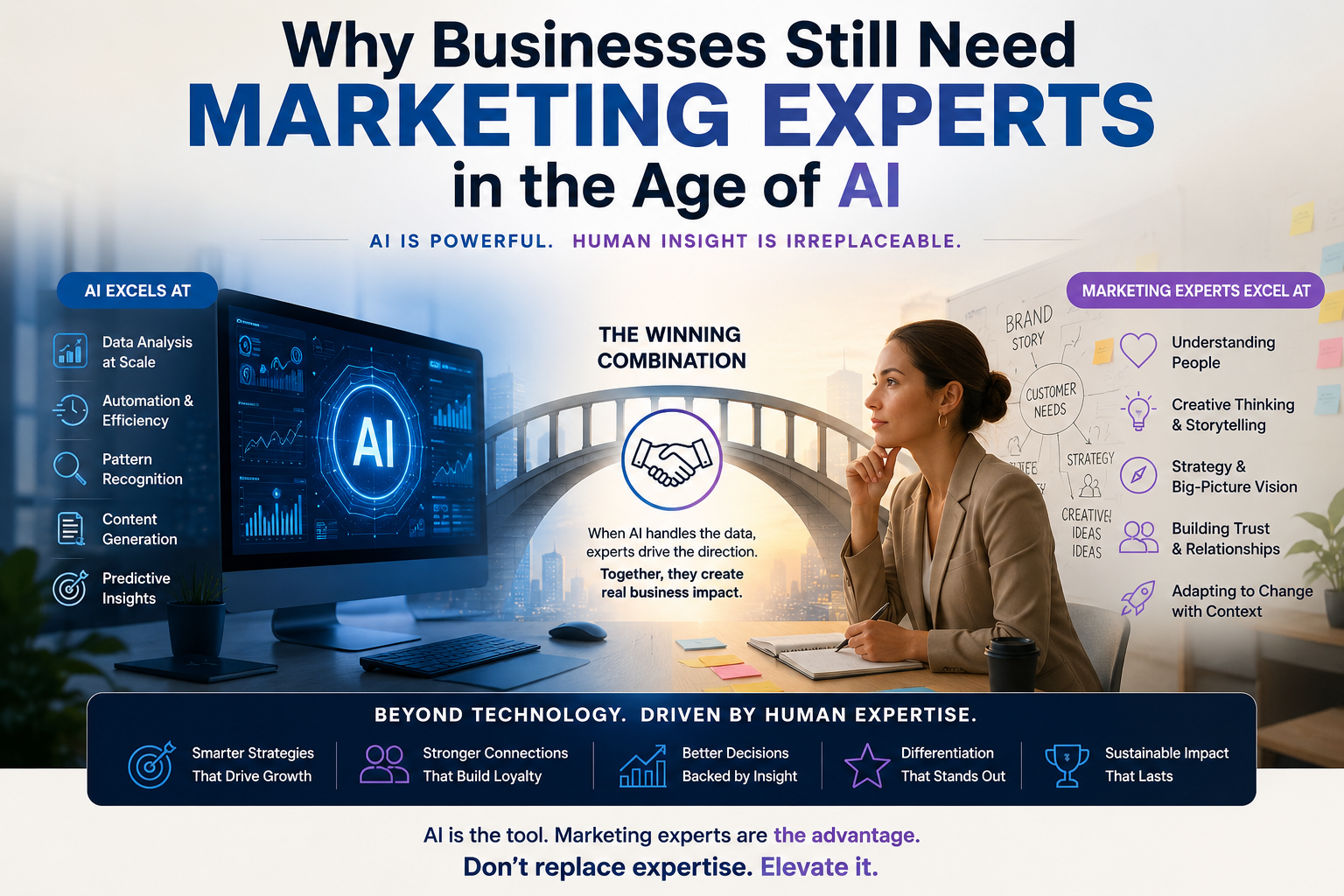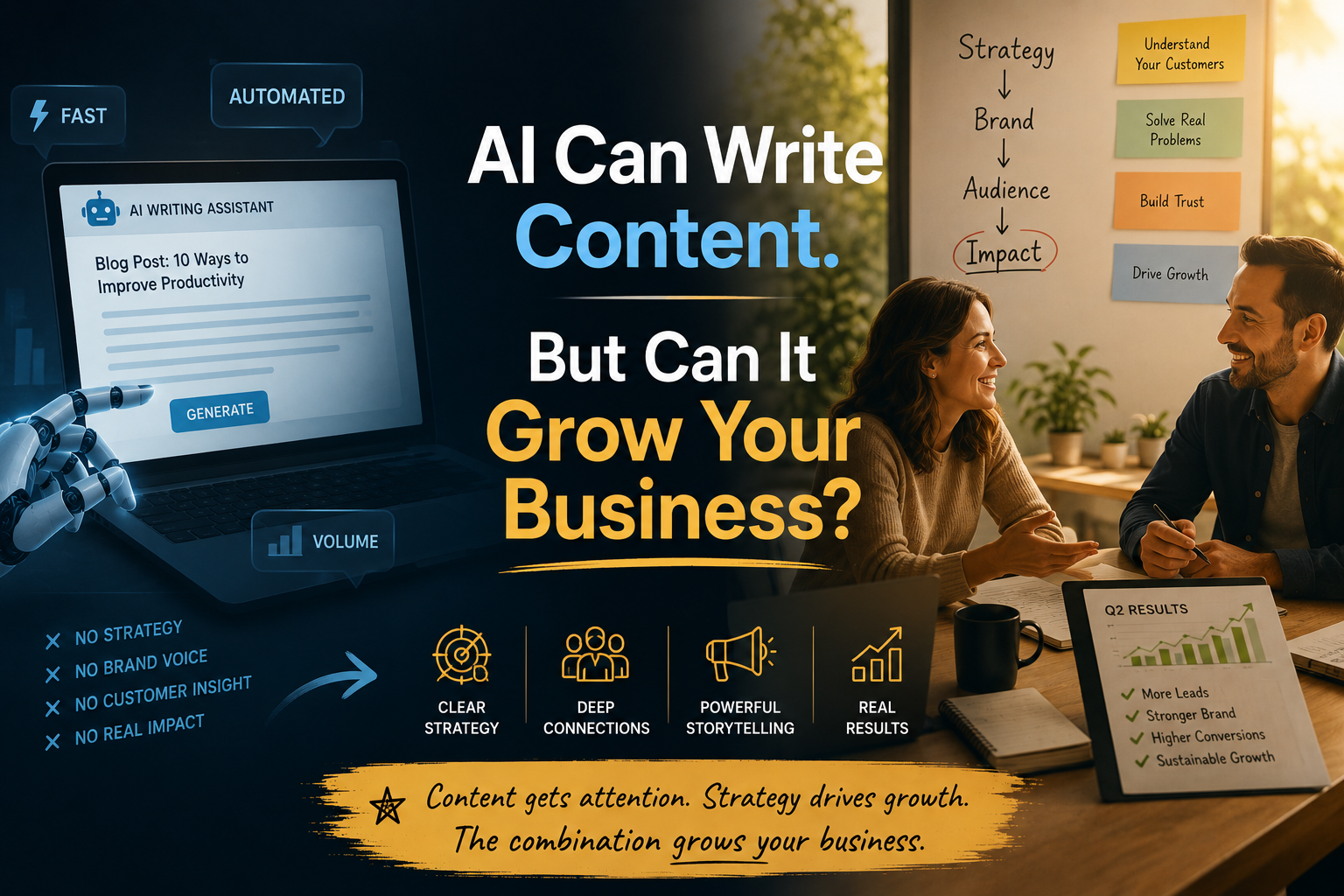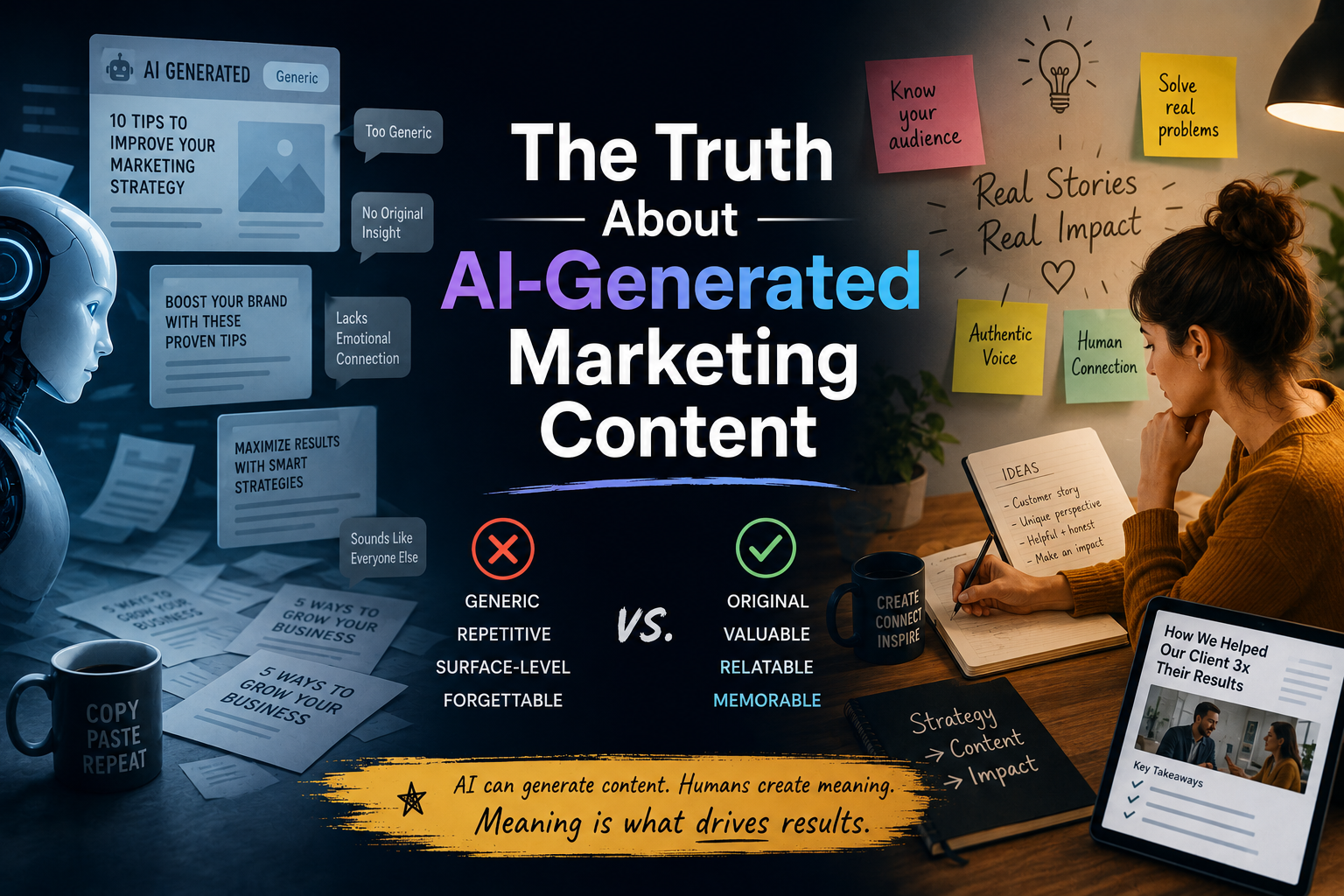
AI is a powerful tool, but not a replacement. Why businesses still need marketing experts in the age of AI is clear: for strategy, creativity, and empath...
Why Human Strategy Still Beats AI-Only Marketing
Why Human Strategy Still Beats AI-Only Marketing
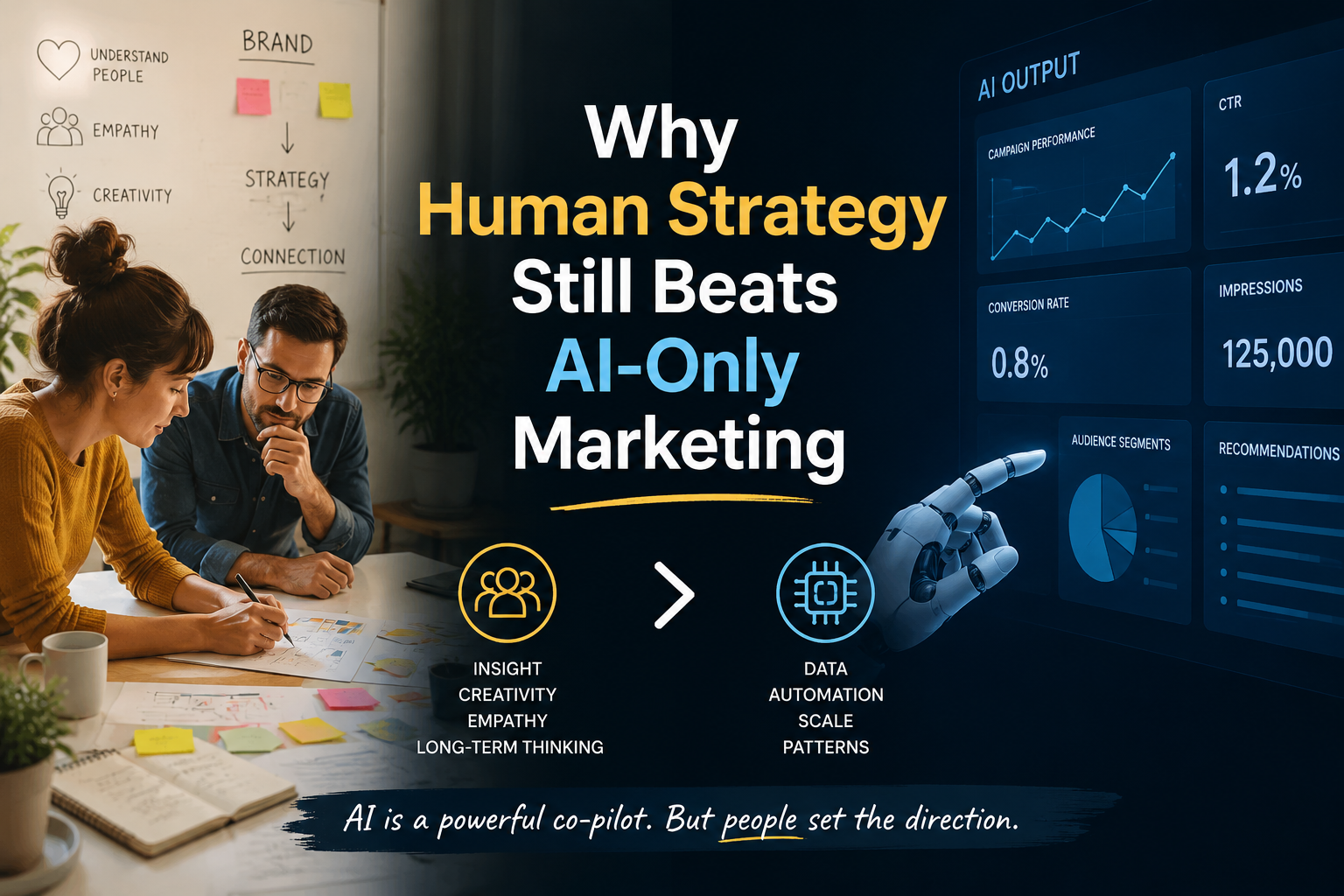
In the rush to adopt new technologies, many businesses are turning to artificial intelligence for their marketing needs. While AI offers incredible efficiency, the core argument for why human strategy still beats AI-only marketing grows stronger every day. AI can process data at an unimaginable scale, but it lacks the intuition, empathy, and creative spark that define truly impactful marketing. Consequently, relying solely on algorithms can leave your brand sounding generic and disconnected from the very people you want to reach.
Marketing, at its heart, is about human connection. Therefore, a successful strategy must be built on a deep understanding of the target audience’s emotions, cultural contexts, and unspoken needs. Human strategists excel at this, using empathy to interpret data and craft messages that resonate on a personal level. For example, a human can detect the subtle shift in consumer sentiment after a major cultural event and adjust the brand’s messaging accordingly, a task that is currently beyond the scope of most AI.
What Are the Limits of Algorithmic Creativity?
A significant question for any marketing leader is whether an algorithm can be truly creative. AI, particularly generative AI, is designed to recognize and replicate patterns from vast datasets. It can produce blog posts, ad copy, and even images that are technically proficient. However, this is fundamentally different from true innovation. Groundbreaking ideas and disruptive campaigns that capture the public’s imagination almost always stem from a uniquely human perspective, often by breaking established patterns, not following them.
Understanding Strategic Context
Moreover, human strategists operate with a level of strategic context that AI cannot yet achieve. They can anticipate competitor moves, understand the long-term implications of a campaign, and pivot based on real-world feedback that isn’t yet reflected in the data. This foresight is crucial for navigating the complexities of the market. A human can connect the dots between a new piece of legislation, a trending social media topic, and a new product launch to create a timely and relevant campaign. This is a perfect example of a holistic marketing approach that integrates various dynamic factors.
Key Reasons Why Human Strategy Still Beats AI-Only Marketing
The debate isn’t about discarding technology but understanding its proper place. There are several concrete reasons why human strategy still beats AI-only marketing, especially when aiming for sustainable growth and brand loyalty. These elements highlight the functions where human oversight is not just beneficial, but essential.
- Emotional Intelligence (EQ): Humans can connect with customers through shared experiences and emotional understanding. This allows for the creation of campaigns that inspire, comfort, or excite, fostering a much deeper brand relationship than data-driven personalization alone ever could.
- Ethical Oversight and Brand Safety: AI can inadvertently generate content that is biased, inappropriate, or damaging to a brand’s reputation. A human strategist acts as a crucial ethical filter, ensuring all marketing efforts align with the company’s values and avoid costly missteps. For more on this, reputable sources like Harvard Business Review offer deep insights into AI’s changing role.
- Complex Problem-Solving: When a campaign underperforms, an AI can show you the data, but it can’t always tell you the ‘why’. It takes human critical thinking to diagnose complex problems, interview customers, and develop creative solutions that get a strategy back on track.
- Authentic Storytelling: Great brands are built on great stories. Humans are natural storytellers, capable of weaving a narrative around a brand that creates a lasting legacy. This is a core part of what makes expert SEO services so effective—they build a narrative that search engines and people can understand.
Integrating AI as a Powerful Tool, Not a Strategist
The most effective path forward involves a partnership between human and machine. Businesses should view AI as an incredibly powerful assistant that can supercharge a human-led strategy. For instance, AI can be used to analyze massive datasets to identify potential customer segments, automate the distribution of personalized emails, and run A/B tests at a scale humans never could. This is a clear demonstration of what AI can do for marketing and what it still can’t.
Ultimately, the human strategist takes these AI-generated insights and weaves them into a cohesive, empathetic, and creative plan. The machine provides the ‘what,’ while the human provides the ‘so what.’ This synergy allows marketing teams to work smarter and faster without losing the essential human touch. Embracing this model is the key to understanding why human strategy still beats AI-only marketing; it’s about augmenting intelligence, not replacing it.
Final Thoughts
In conclusion, while AI tools are transforming the marketing landscape, they are not a substitute for human strategic thinking. The ability to empathize, innovate, and provide ethical oversight remains a uniquely human domain. By leveraging AI for its strengths in data processing and automation, marketers can free themselves up to focus on what truly matters: building authentic connections and crafting memorable brand experiences. The future of marketing is not a choice between human or AI, but a seamless integration of both, guided by human wisdom.
Related Posts