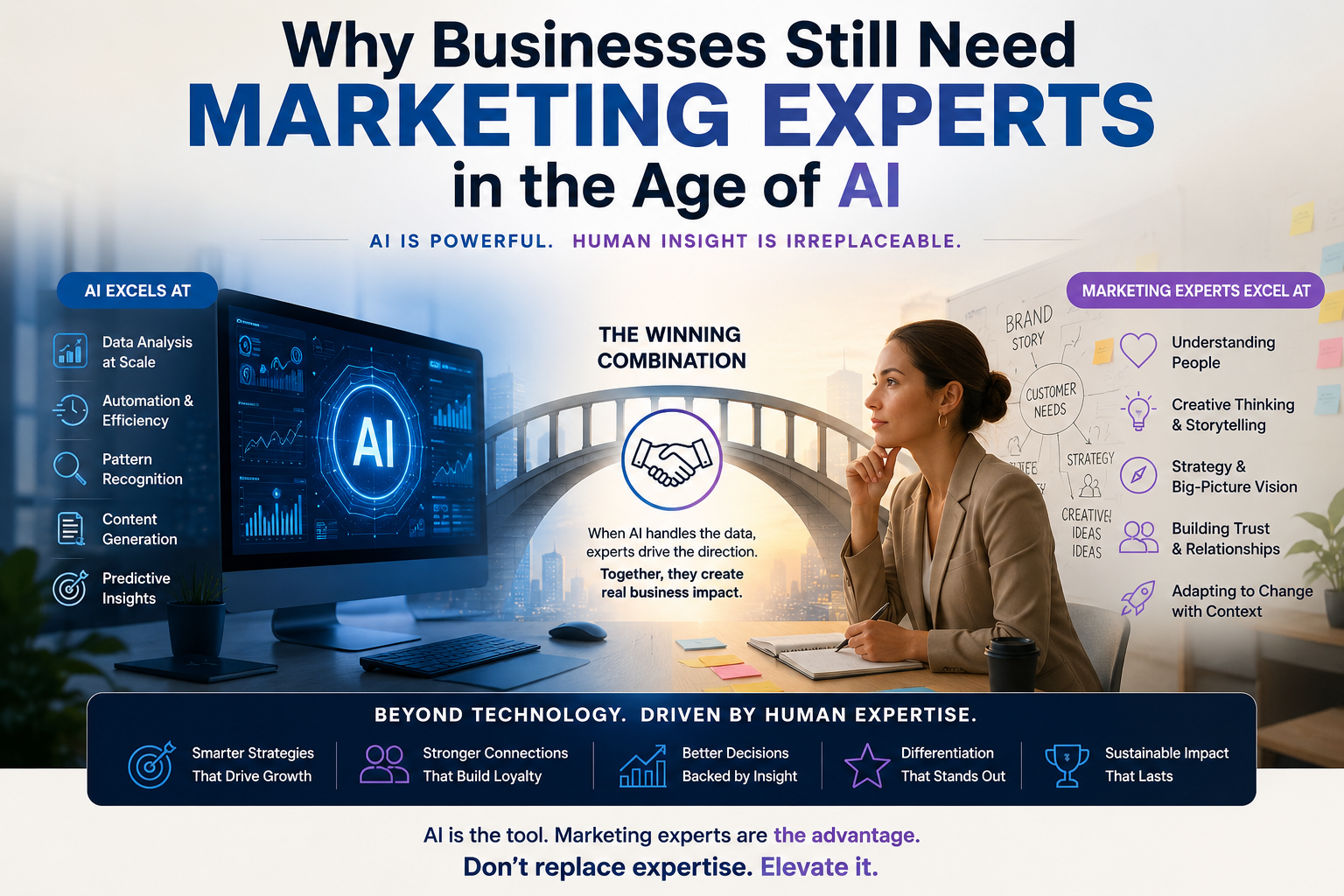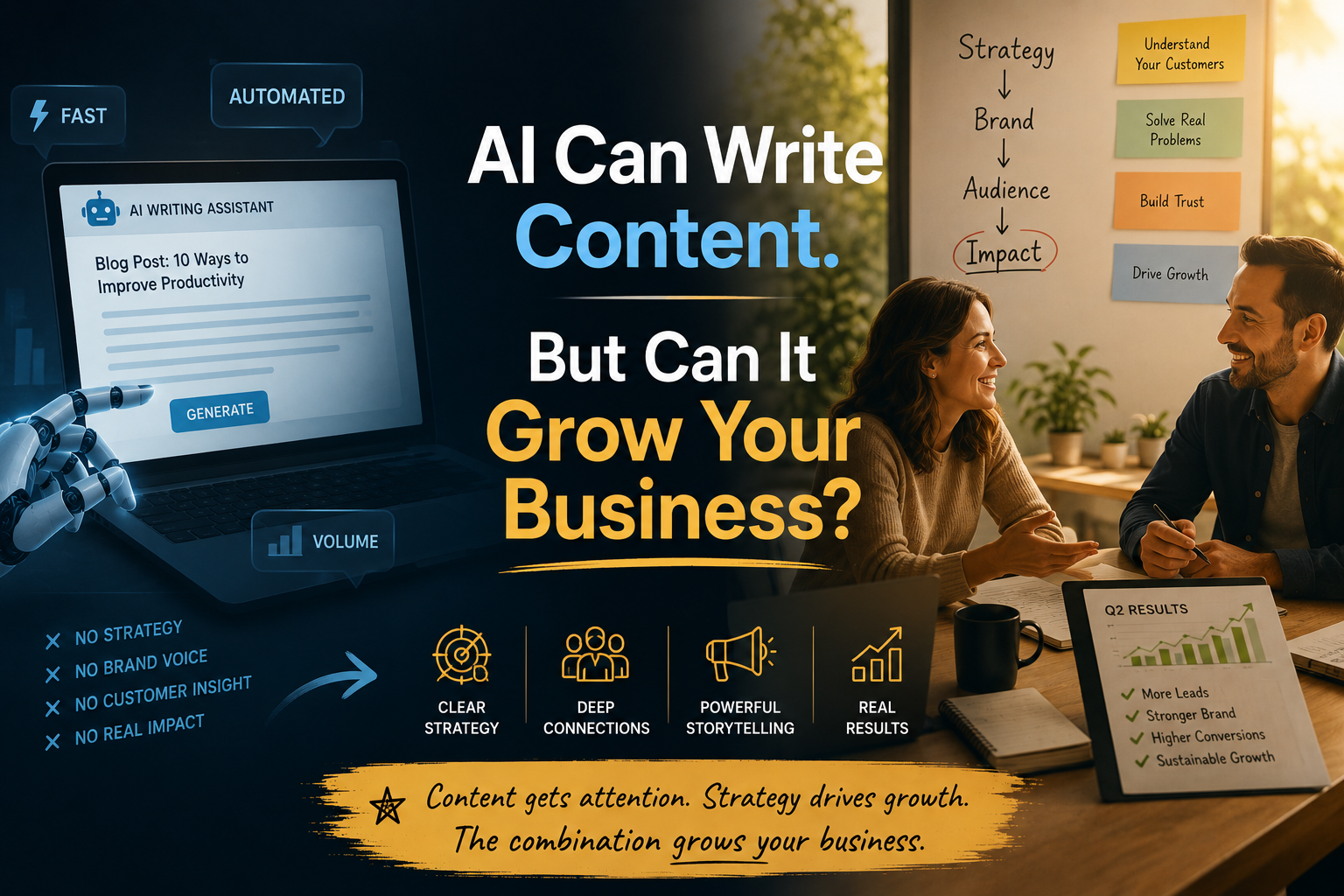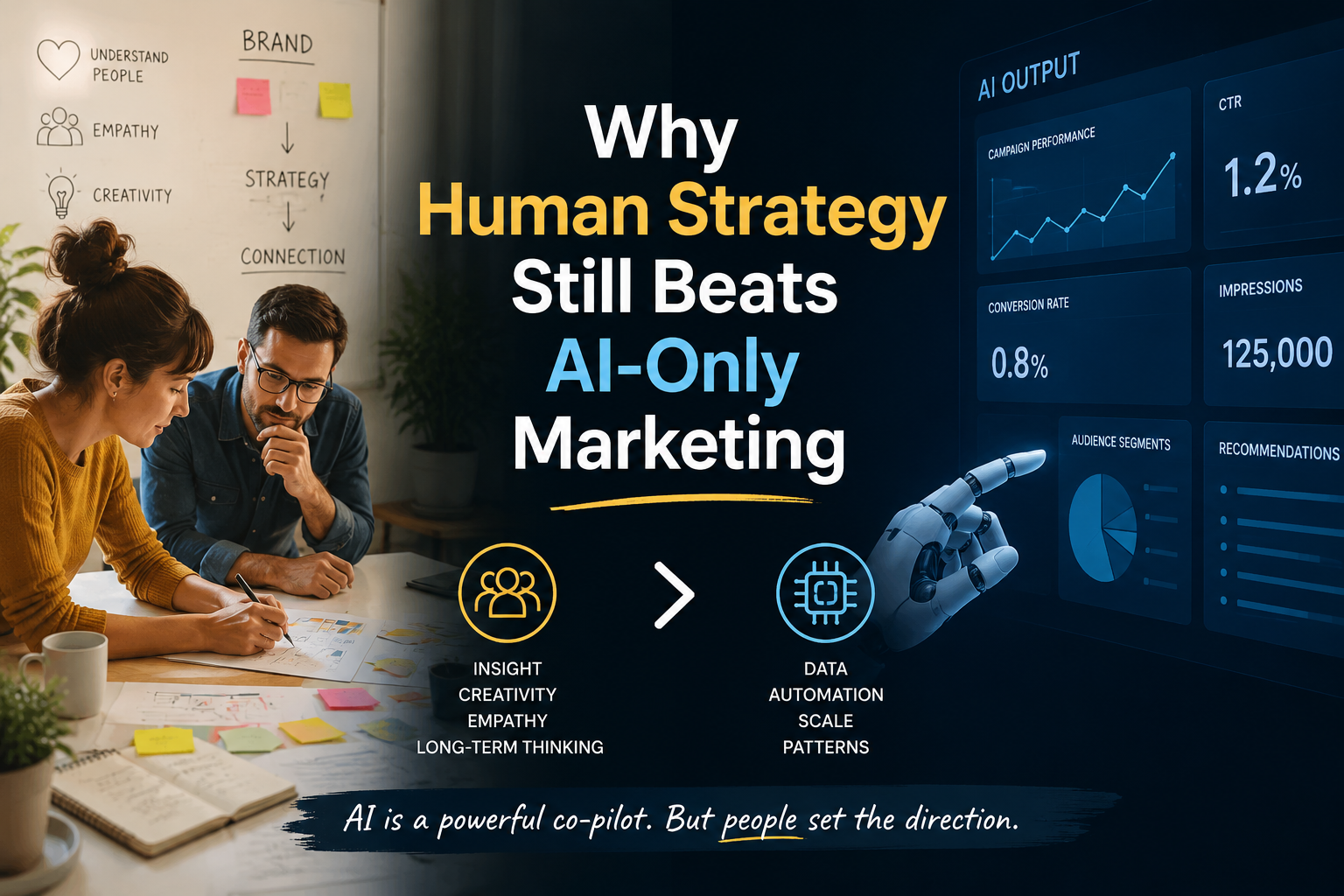
AI is a powerful tool, but not a replacement. Why businesses still need marketing experts in the age of AI is clear: for strategy, creativity, and empath...
The Truth About AI-Generated Marketing Content
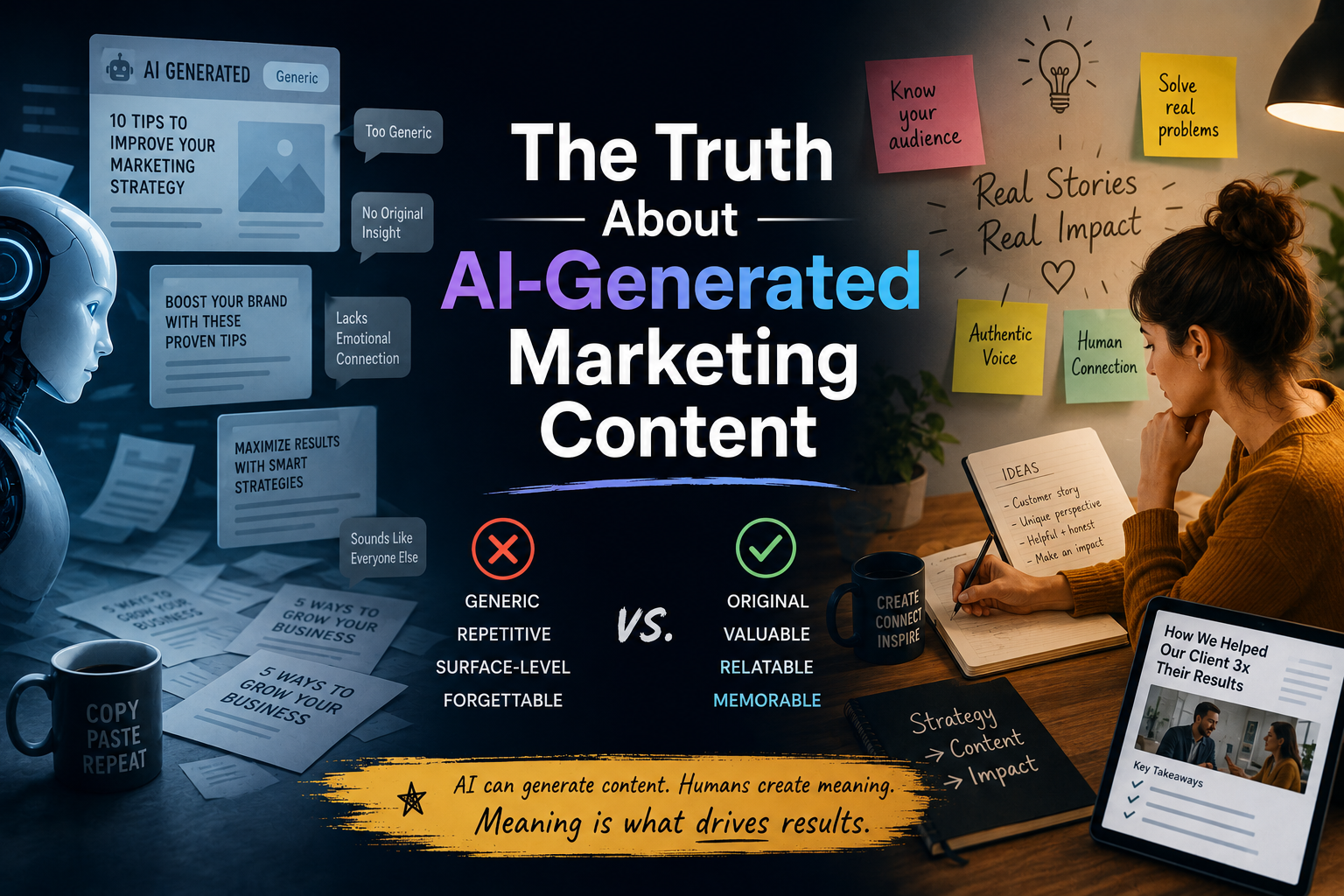
In the rapidly evolving landscape of digital marketing, it’s nearly impossible to ignore the buzz around artificial intelligence. Specifically, many are asking about the truth about AI-generated marketing content and its potential to revolutionize how brands communicate. While AI tools offer unprecedented speed and efficiency, they also introduce significant risks if used without a clear strategy and human oversight. Therefore, understanding both the capabilities and limitations of this technology is crucial for any business looking to stay competitive.
AI-generated content is any form of text, image, or media created by an artificial intelligence algorithm, often based on prompts and data provided by a user. For example, tools like GPT-4 can produce blog posts, social media updates, and email campaigns in seconds. Consequently, marketers are drawn to the promise of scaling their content production efforts at a fraction of the traditional cost and time. This technology can be a powerful asset for brainstorming ideas, creating initial drafts, and overcoming writer’s block.
What Are the Real Risks of Using AI for Content?
While the benefits are tempting, the potential downsides require careful consideration. Deploying AI content without a rigorous quality assurance process can damage your brand’s reputation and search engine rankings. Furthermore, it can lead to a disconnect with your target audience.
Factual Inaccuracies and ‘Hallucinations’
One of the most significant dangers of AI is its tendency to ‘hallucinate’—that is, to invent facts, statistics, or sources that sound plausible but are entirely false. For a business, publishing inaccurate information can erode trust and credibility. As a result, every single claim produced by an AI tool must be meticulously fact-checked against reliable sources before publication.
Generic Voice and Lack of Originality
AI models are trained on vast amounts of existing internet text. Consequently, their output often reflects a bland, averaged-out voice that lacks the unique personality and perspective of your brand. Your content is a primary channel for building a relationship with your audience; generic text fails to create that connection. Importantly, this is where human writers and brand strategists become irreplaceable, infusing content with authentic stories, expert insights, and a distinct tone.
Navigating SEO and Quality Guidelines
Google’s stance on AI content has evolved. The focus is not on *how* content is produced, but on its quality and helpfulness to the user. As stated in their official guidance, low-quality, unoriginal content is problematic, whether written by a human or an AI. In contrast, high-quality content is rewarded. Authoritative sources like Google’s Search Central blog emphasize that their ranking systems aim to reward original, helpful content created for people. This means simply churning out AI articles for the sake of volume is a failing strategy that could harm your site’s visibility.
How to Ethically Leverage The Truth About AI-Generated Marketing Content
The most effective approach is to view AI as a powerful assistant, not an autonomous creator. By integrating AI into a human-led workflow, you can harness its speed while maintaining high standards of quality and authenticity. This hybrid model is the key to unlocking the technology’s true potential. Embracing this collaborative method reveals the truth about AI-generated marketing content: it’s a tool that enhances, rather than replaces, human expertise.
Here are some best practices for using AI responsibly in your content strategy:
- Use AI for Ideation and Outlining: Leverage AI to brainstorm topics, generate headlines, and structure your articles. This can significantly speed up the initial phases of content creation.
- Create First Drafts, Not Final Copies: Allow AI to produce a rough draft, then have a human expert rewrite, edit, and enrich it with unique insights, examples, and brand voice.
- Prioritize Rigorous Fact-Checking: Never trust AI-generated statistics, dates, or claims without verification from multiple authoritative sources like industry reports or academic studies.
- Inject Your Unique Expertise: The most valuable content comes from your experience. Add personal anecdotes, case studies, and expert opinions that an AI cannot replicate. This is crucial for building a successful digital marketing strategy.
- Optimize with a Human Touch: While AI can suggest keywords, a human SEO expert should perform the final optimization, ensuring natural keyword integration, strategic internal linking, and adherence to advanced SEO strategies.
The Human-AI Hybrid: A New Era for Marketing
The future of content marketing isn’t a battle between humans and machines; it’s a partnership. A skilled marketer can guide an AI to handle the repetitive, time-consuming tasks, freeing them to focus on high-level strategy, creative thinking, and audience engagement. This synergy allows businesses to produce better content, faster. Similarly, it’s important to understand what AI can and cannot do for marketing to set realistic expectations.
Think of it like a master chef using a high-tech food processor. The machine handles the chopping and mixing, but the chef’s palate, experience, and creative vision are what ultimately create a Michelin-star dish. Similarly, marketers must guide the AI, edit its output, and add the final layer of strategic polish. Some publications have even noted that Google’s guidelines have historically been against spammy, auto-generated content, a principle that still holds true as detailed by sources like Search Engine Journal.
Final Thoughts
Ultimately, the truth about AI-generated marketing content is that it is a transformative tool with immense potential, but it is not a magic wand. Its effectiveness is entirely dependent on the human strategy guiding it. By embracing a hybrid approach that combines AI’s efficiency with human creativity, critical thinking, and ethical oversight, you can create high-performing content that resonates with your audience and achieves your business goals. The key is to remain the master of the technology, not the other way around. Ready to build a content strategy that intelligently integrates AI? Contact us to learn how we can help.
Related Posts